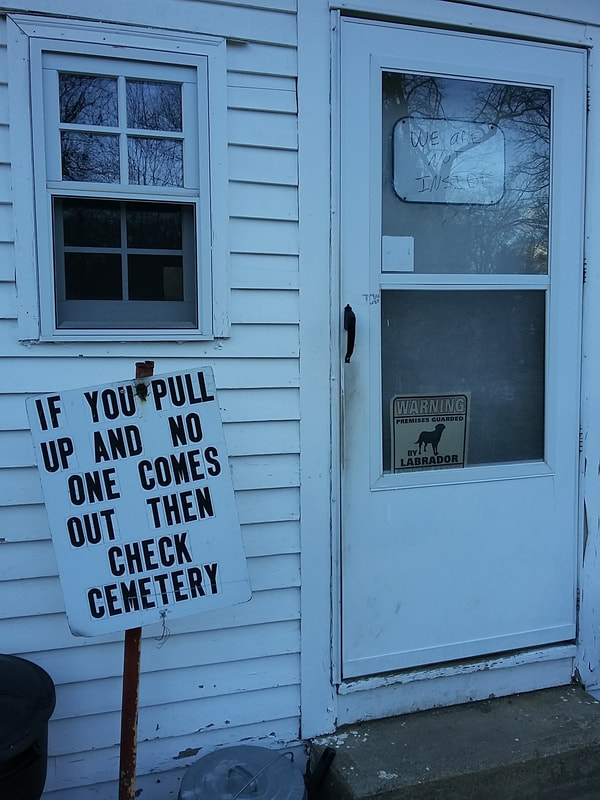
 I visited Ridgewood Cemetery again, in search of the grave of Joseph W. Poor (1830-1910). Still no luck, and again failed to go there when the office was open. (M-F, 9-noon.) I have now left a message on the office phone, asking about how to get directions to the site. Meanwhile, I saw the sign pictured above at the entrance to the superintendent's building. We should all have a similar sign posted on our office door, to remind us of what's coming. I also like the philosophical message not well seen in this photo, behind the glass: "We are not inside." Indeed!
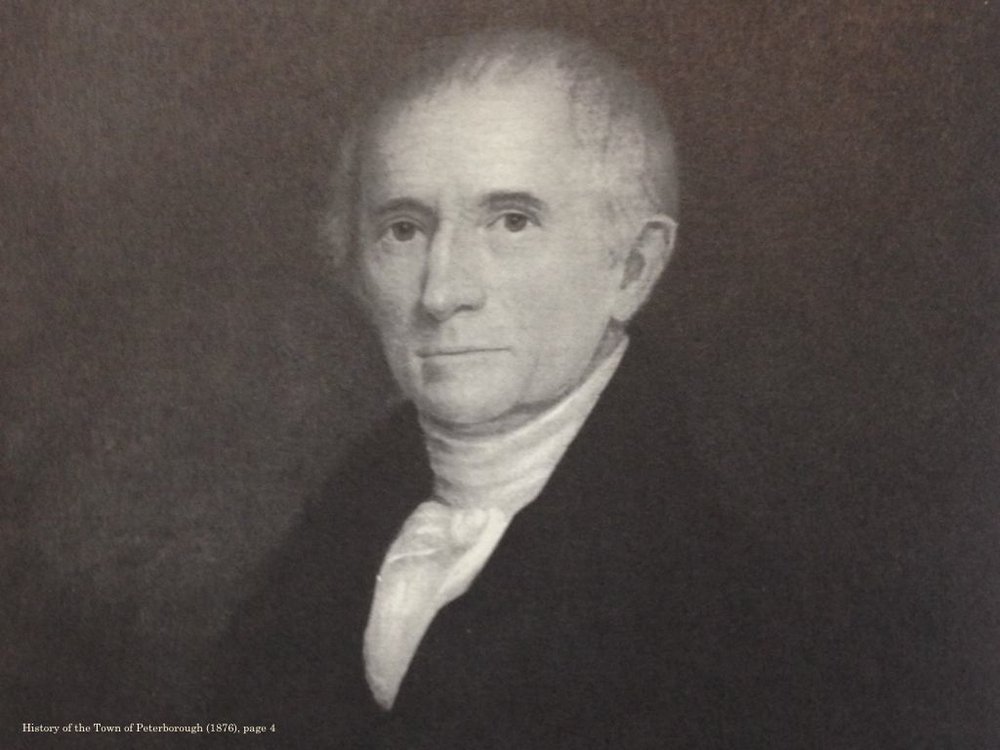 Are you feeling about yet another dead white male making an appearance in these Commentaries the same way I am feeling? He is Abiel Abbot (1765-1859), Harvard class of 1787, an eventual doctor of divinity, who wrote the book I am now reading, History of Andover From Its Settlement to 1829, published in Andover in 1829, so for him, it was an up-to-date compilation. (He calls himself "The Compiler" of the book, not its author, because he "used with much freedom, the language of the documents from which the compilation has been made.") Aside from my inability to think of him as a "real" person, I am distracted by his contemporary perspective. For example, he writes, of the "Indians": "It was important to our ancestors, that peace was preserved with the natives for so many years. There was no war with them near Andover for more than thirty years after the plantation was begun [in 1642]; but they were obliged to attend to military duty and to be equipped. How easily might the first settlers of New England have been destroyed, had the natives been hostile, and had they combined and exerted themselves to remove their neighbours! Divine providence favored the arduous undertaking of settling a wilderness. The first planters were men of principle, and treated the savages with kindness and justice, and secured their confidence." He continues: "When wars commenced, the planters had increased in numbers and strength, and, with their superior skill and means of defence, they were able to protect themselves, and drive the enemy to different parts, or weaken and destroy them, and compel them to preserve peace." As Reverend Abbot describes it, in those earliest years of white settlement, the Merrimack was teeming with fish and the forest filled with game. "The [native] inhabitants were able safely and quietly to pursue their business..." But some thirty years later, by his own account things had changed. After a single generation, although he doesn't state it, the colonists had begun to encroach upon the natives' way of life. What he does say is that they rebelled, they fought, and lost. "It is probable, that the Indians left Andover, at the commencement of Philip's war [1675], and that few, if any, families have resided there since. The residence of an Indian family in Andover is not now recollected by the oldest inhabitants." Actually, according to Claude M. Fuess's history of Andover, there was a direct Indian attack on Andover in 1676, on April 8th, to be exact. In recounting those so-called Indian Wars of 1676, Fuess calls the Native Americans “savages” (Fuess, Andover: Symbol of New England, p. 70); “red men” (p. 73); and “copper-colored inhabitants” (p. 11). Likewise, Abiel Abbot's is, of course, in every way an account from the perspective of himself. There is no attempt at seeing the town's history from any other point of view. And yet I need to read it to learn about the early days of the colonists in the place they named Andover. And so I hold it at arms' length and read on, trying to accept the reverend as someone who isn't a caricature, someone I probably would have agreed with, and commiserated with, if I had been born in his time and place instead of mine. The exercise is part of my attempt at trying to accept and understand people who don't agree with me today. They too strike me as caricatures, but the fact is, they are real -- as real as Abiel Abbot once was. To be continued. 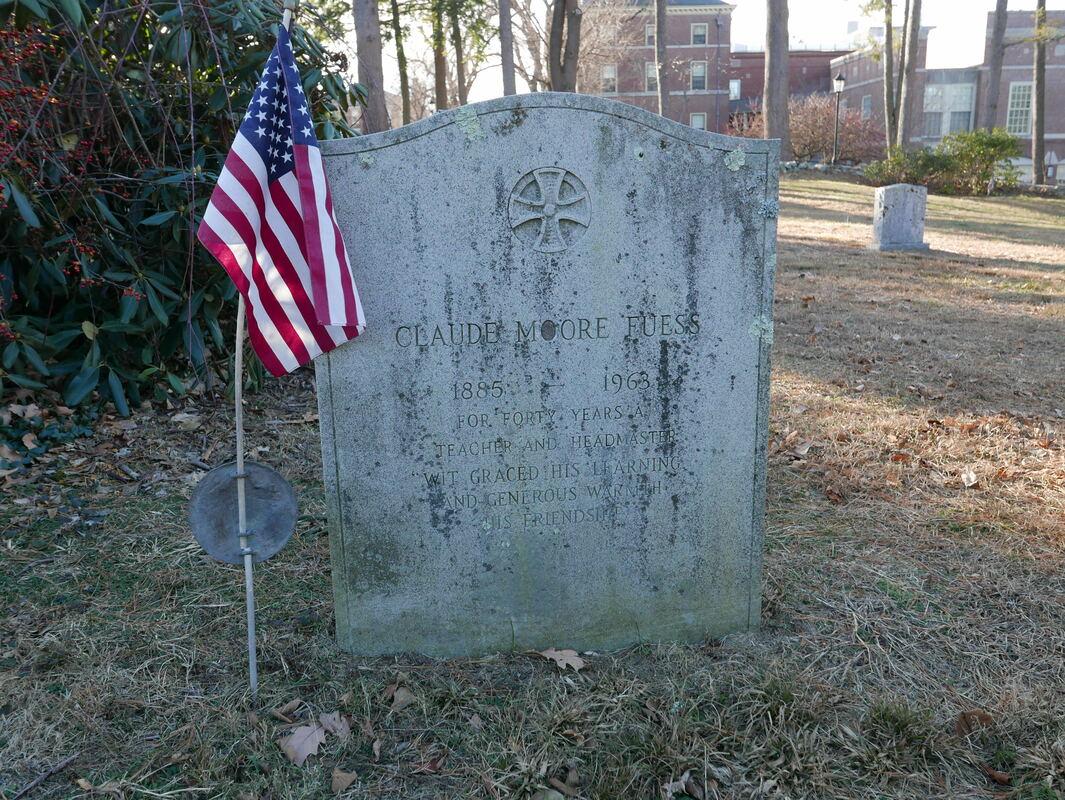 According to both Fuess (whose grave at P.A. is pictured here) and Abbot, a Native American named Cutshamache sold the land we now call Andover to the town's founders sometime prior to 1646, the year of incorporation. The price was 6 pounds and a coat. But Fuess probably got the detail from Abbot. (Fuess, Andover: Symbol of New England, 1959, p. 29), (Abbot, History of Andover, 1829, p. 11). 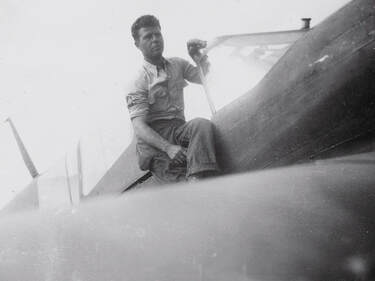 Henry L. Schinto (1919-2012), during WWII. Henry L. Schinto (1919-2012), during WWII. Fifty years ago, when my father was teaching me to drive, he said, "Go in reverse as little as possible." It's good advice for conducting one's life in general. Try not to look back; avoid focusing on the ground you've already covered. Look forward into the future.
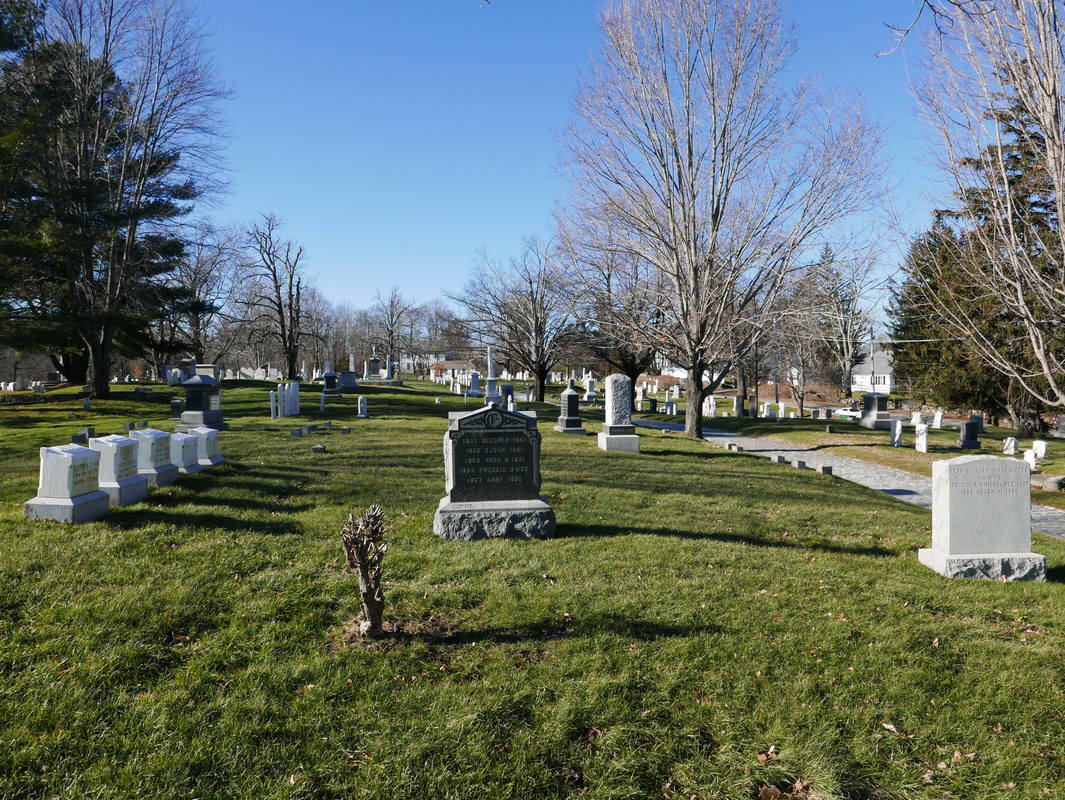
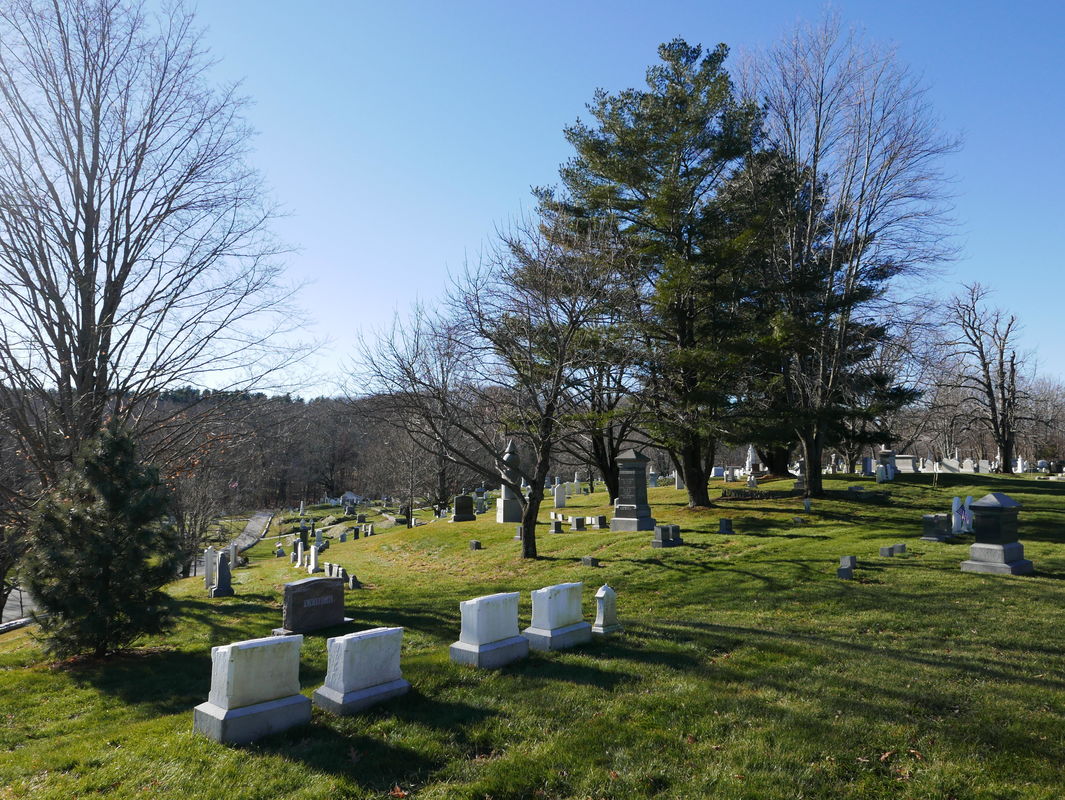
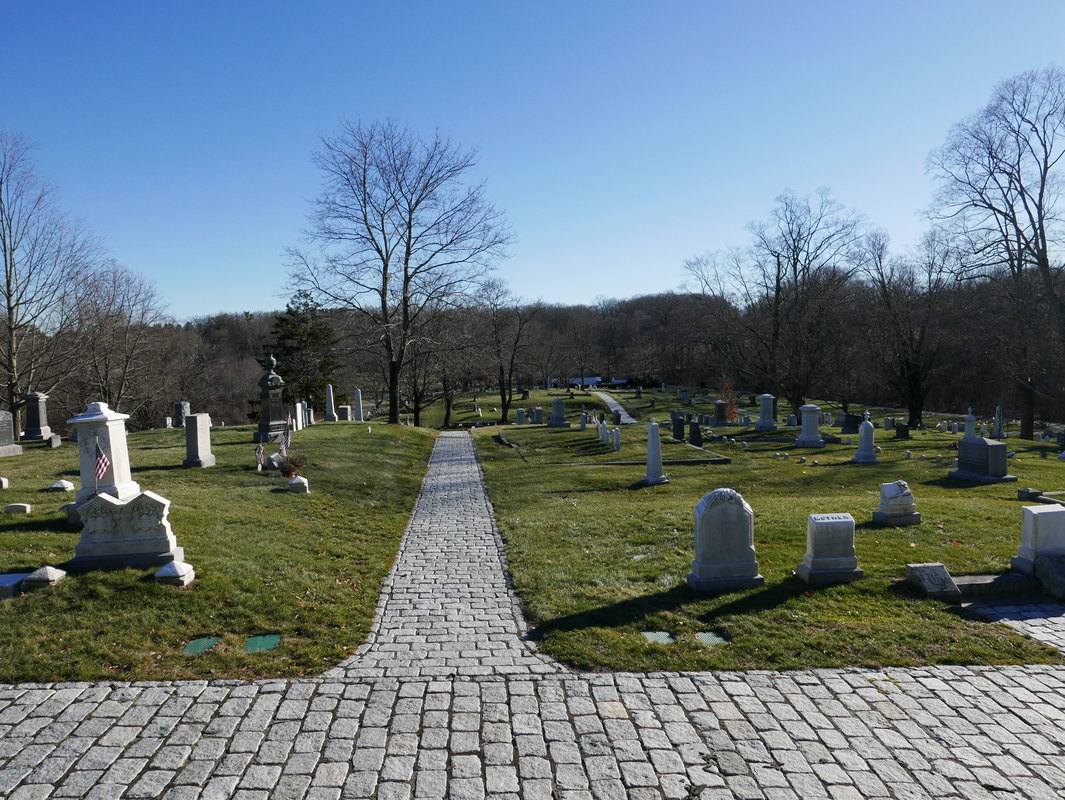
In reading about Andover and writing this personal history of the town, I am intently focused on its past. But that's very different from mulling over my own past. I went to Ridgewood Cemetery in North Andover, looking for the grave of Joseph W. Poor (1830-1910), whose house a few doors up from mine on Poor Street is a supposed stop on the Underground Railroad. But I hadn't realized the place was so vast. That's why I hadn't thought to consult a directory, and the office wasn't open. I will have to return. It won't be a hardship. it has become a favorite pastime of my husband and mine to walk in these picturesque cemeteries. I myself plan to be cremated, but there is something nice about a gravestone, especially on a beautiful day conducive to photography. As we look for names pertinent to my research, we also read the names and epitaphs of strangers, perhaps ones who haven't been visited in many, many years. I used to believe in life after death. As a young Catholic, I prayed for the souls burning in Purgatory -- a temporary hell. I experienced a sense of pride and accomplishment as I offered up indulgences of 300 days, 500 days, and so on, shaving off years from the sentences of those waiting to get into Heaven. I always had in mind the ones who didn't have any survivors on earth willing or able to do this favor for them. What innocence! But even then my disbelief was precariously suspended, and when I reached adolescence, my religious fervor was easily transferable to such entities as... the Beatles. John Lennon was right. Here's the full, often misrepresented quote from that 1966 interview: "Christianity will go. It will vanish and shrink. I needn’t argue about that; I’m right and I’ll be proved right. We’re more popular than Jesus now; I don’t know which will go first -- rock ’n’ roll or Christianity. Jesus was all right but his disciples were thick and ordinary. It’s them twisting it that ruins it for me."
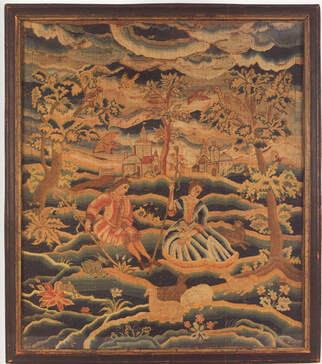 I like to think of Phillips Academy as a place where good values reign -- and they mostly do. Yet when an exquisite, eighteenth-century needlework hanging on the wall of its Addison Gallery of American Art was discovered to have been stolen property, P.A. as much as said "tough luck" to its rightful owner. I was reminded of this incident of more than twenty years ago when, while walking through the cemetery at P.A. on Christmas Day, I came upon a plaque under a tree planted in honor of board of trustees member David M. Underwood (1937-2015), P.A. class of ’54. It was he who donated the $32,200 that P.A. paid for the purloined piece at a Sotheby's sale in New York on October 22, 1994. The object was attractive to P.A. not only for its beauty and workmanship but also because it had been executed by Hannah Phillips (1742-1764), a member of the family that founded P.A. in 1778. Indeed, she was the elder sister of Samuel Phillips (1752-1802). It perhaps goes without saying that neither P.A. nor Sotheby's knew the needlework had been stolen when it changed hands. Nor had the theft been reported. W.G. Brooks Thomas (1925-2008) had assumed it to have been destroyed when his house, in Jamestown, Rhode Island, burned down in 1986 in a suspected arson blaze so severe that six firefighters were injured doing battle with it. But once he was made aware of its continued existence, there was no doubt it was the one his father, C. Lloyd Thomas (P.A., class of 1914), bequeathed to him upon his death in 1982. In turn, the elder Thomas had received it in a bequest. The Thomases are related to the Phillipses. Known as The Shepherdess, the needlework depicts a woman seated in a fanciful landscape surrounded by animal figures, including lambs and rabbits. A fellow sheepherder, presumed to be wooing her, is seated by her side. Each has a shepherd’s crook in hand. Clouds, birds, butterflies, and two architectural structures, one of which appears to be a church, complete the picture. Its colors are teal blue, rose pink, golden beige, and brown. The provenance given in the Sotheby's catalog says it was descended in the Phillips family to a "C. Thomas Lloyd" -- obviously a typo, a transposition, and a main reason why no one in the Thomas family was alerted to it at the time of the sale. The Sotheby's provenance states further that it went next to an antiques dealer, William Taylor of Attleboro, Massachusetts. That part is accurate. Mr. Taylor was in fact the one who sold it to Nina Fletcher Little (1903-1993), a renowned, early American folk art collector and scholar — a pioneer in the field — whose collection was sold by Sotheby’s in two landmark sales. P.A. bought the needlework at the first one. That the needlework resurfaced after the Thomas house and its contents went up in flames wasn’t a complete surprise. A few years after the fire, Jamestown police recognized some of the Thomas property on a list of seized items circulated by police in a nearby community, South Dartmouth, Massachusetts, whereupon Mr. Thomas recovered a painting, a chandelier, and a few other antique objects. However, he didn’t learn the whereabouts of the needlework until 1995, when Betty Ring (1923-2014), a textile scholar doing work on a catalog for the Addison, alerted him to it. She had been commissioned to write about both The Shepherdess and another needlework, given to the Addison by the elder Thomas in 1962. It was then that the true provenance of The Shepherdess was understood. Mr. Thomas thought it would be a simple thing to have the property, his property, returned to him, especially after being reassured by a lawyer for the Little estate. But soon enough, a different lawyer began to communicate with him and it seemed it wasn't going to be so simple after all. And so, on a Wednesday afternoon, May 29, 1996, Mr. Thomas and his wife drove up from Rhode Island to Andover and, with photographs, insurance lists, and other proof of ownership at the ready, walked into the gallery to claim it. "We finally wound up standing in front of our Hannah Phillips needlework hanging on the wall," he wrote in a letter to the editor of Maine Antique Digest. With them were the Addison's security chief, its director of museum resources, B.J. Larson, and Andover police detective James E. Haggerty. "Detective Haggerty left with us saying he thought he'd have it back for us in a week," Mr. Thomas's letter continued, "and we understood Larson would take the matter up with [gallery director] Mr. [Jock] Reynolds upon the latter's return." But Detective Haggerty called them a week later with bad news. He could do nothing for them. They heard nothing from the gallery or from P.A. itself. So on July 12, 1996, the Thomases wrote to head of school Barbara Landis Chase in whose honor the needlework had been bought in the first place. To be fair, it was the Thomases' first, direct communication with P.A. about the matter. But P.A. took its time in responding. "We finally received a letter back from her dated August 9, 1996," said Mr. Thomas, who recounted that "Ms. Chase, while being oh-so-sympathetic about our loss and wanting to talk to us, made a written statement, viz., 'After having consulted counsel, it is our belief that the Addison came into possession of the Shepherdess lawfully and that it is entitled to retain possession of the needlework.'" Say wha'? Finders keepers? Mr. Thomas thought not, and by the following November, his M.A.D. letter states, "my lawyer straightened the Gallery and the school out on the law and obtained the return of the needlework. Sorry, Andover, it was stolen from me and you are not entitled to keep stolen goods. "I still think the school should pay my legal bills...," Mr. Thomas opines in conclusion. "The needlework came down through my Phillips ancestors to me. It was stolen, and I got it back. It cost me legal fees I should never have had to pay. End of story." It is not known if Andover moved against Sotheby's, the auction house against the Little estate, the estate against the dealer, and the dealer against whomever he bought the needlework from. But a good guess is that none of these parties did so. Otherwise, these actions surely would have been reported in M.A.D. by staff or by Constance Lowenthal, executive director of the International Foundation for Art Research, who initially brought the story to M.A.D.'s attention. It is presumed, then, that the thief or thieves got away with it. But at least P.A. didn't. 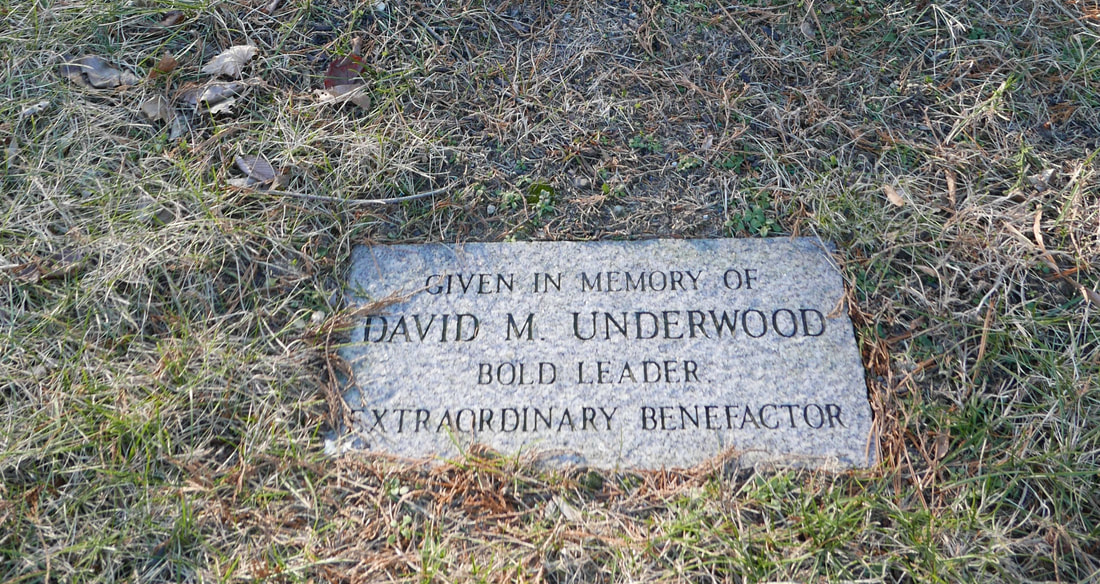 Plaque under a tree planted in honor of David M. Underwood of Houston, Texas. 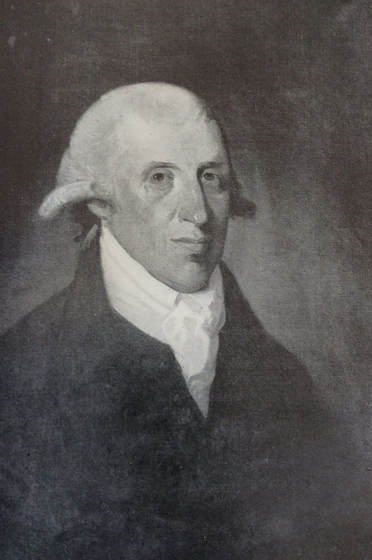 Samuel Phillips Jr. Samuel Phillips Jr. Since it is Christmastime, my thoughts have turned to the wise Calvinists who banned it. Being that Phillips Academy’s founder, Samuel Phillips, was an ardent follower of Jonathan Edwards ("Sinners in the Hands of an Angry God" [1741]), he assuredly wasn’t trimming a tree in Andover during his lifetime here. So when exactly did he live? Those who study Andover’s history surely must get confused, as I have been, about all the different men named Samuel Phillips. Among others, there was Samuel Phillips (1689-1771), pastor of South Church and author of "Seasonable [sic] Advice to a Neighbour, Given by Way of A familiar Dialogue; or In Answer to various Questions, relative to Five important Points of Divinity. Done with a View to promote practical Godlinessl and designed, especially, for the Use of the Inhabitants of the South Parish in ANDOVER. To whom it is Dedicated (1761). There was his son Samuel Phillips (1715-1790), who briefly taught the town grammar school, got involved in colonial politics, was our town moderator prior to the American Revolution, and wasn’t sure he wanted to separate completely from Britain. And then there was his son, Samuel Phillips (1752-1802). He is the one who made the biggest impact both on our municipality and in the wider world. A graduate of Harvard (class of 1771) at age nineteen, Samuel Phillips III had been named Andover’s town clerk and treasurer by 1774, at which time he headed a committee that drew up a resolution declaring "that no person in this town, who has heretofore been concerned in vending tea, or any other person, may not under any pretense whatever, either sell himself, or be in any way accessory to selling any tea of foreign importation, while it remains burdened with a duty, under penalty of incurring the town's displeasure." It would be coffee or chocolate thereafter or nothing, Then in 1775-1776 he was our delegate to the Provincial Congress at Watertown, Massachusetts, joining such others as Samuel Adams and John Hancock. During the war, Samuel Phillips built a powder mill in Andover, near present day Marland Place, and sold the product to George Washington’s army for eight cents a pound. After the war, he gradually transformed the powder mill into a paper mill. He also established a sawmill and a gristmill, and ran two retail establishments, one in Andover, another in the town next door, Methuen. In addition to his entrepreneurial ventures, he engaged in state politics, being elected state senator, then president of the senate after Sam Adams resigned. Later John Hancock appointed him one of the Justices of the Court of Common Pleas for Essex County. At the peak of his political career, he was elected Lieutenant Governor on the Federalist ticket; Caleb Strong was Governor. One wonders when he had time to found Phillips Academy, but he did, in 1778, when he was twenty-six — with funding from his father and uncle John Phillips (1719-1795). So was Christmas celebrated at P.A. in its early years? Not a chance, since Calvinism was its prevailing philosophy. Indeed, there were classes on Christmas Day, according to Claude M. Fuess's history, An Old New England School. Also according to Fuess's research, Daniel Appleton White (1776-1861) was invited to turn down a previously offered position as a P.A. "assistant" (i.e., teacher) because, as a Harvard senior, he had made the mistake in his commencement essay of expressing disbelief in the dogma of human depravity. Whereupon Samuel Phillips told young White it might be wise for him to consider another profession, which he did. He studied law and became a judge. Today he is known chiefly as the founder of the White Fund, a philanthropic foundation that gives money to benefit causes in Andover’s mill-city neighbor, Lawrence -- which, after all, may be the best representation of the true spirit of the season. Merry Christmas! 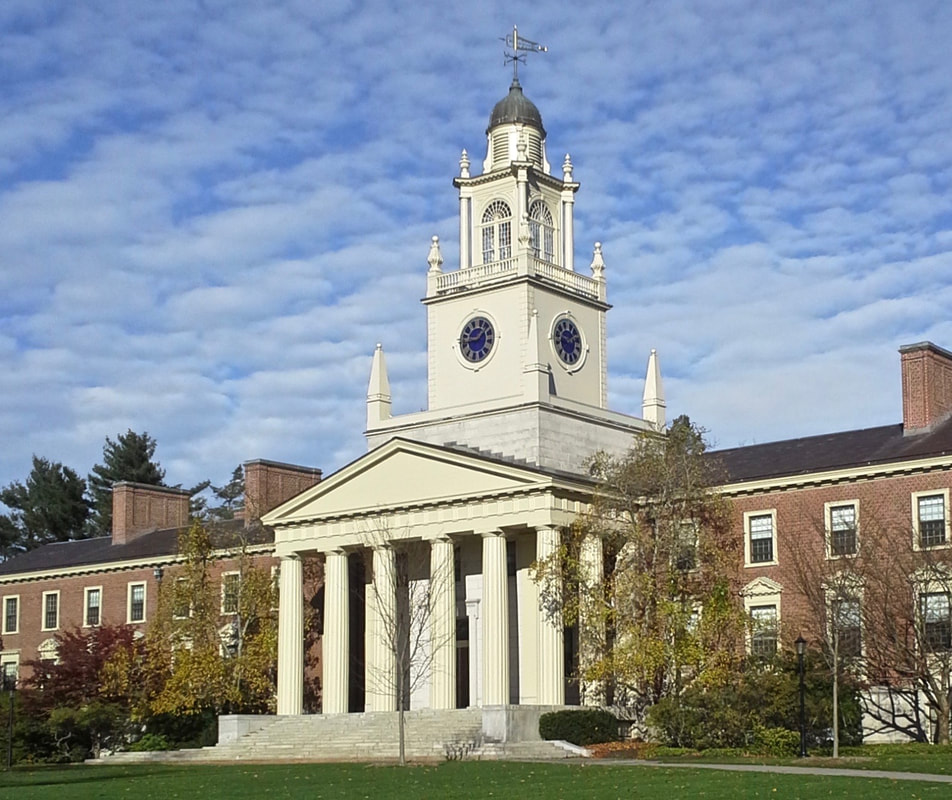 This building on P.A.'s campus was named for founder Samuel Phillips; it is known as Sam Phil. 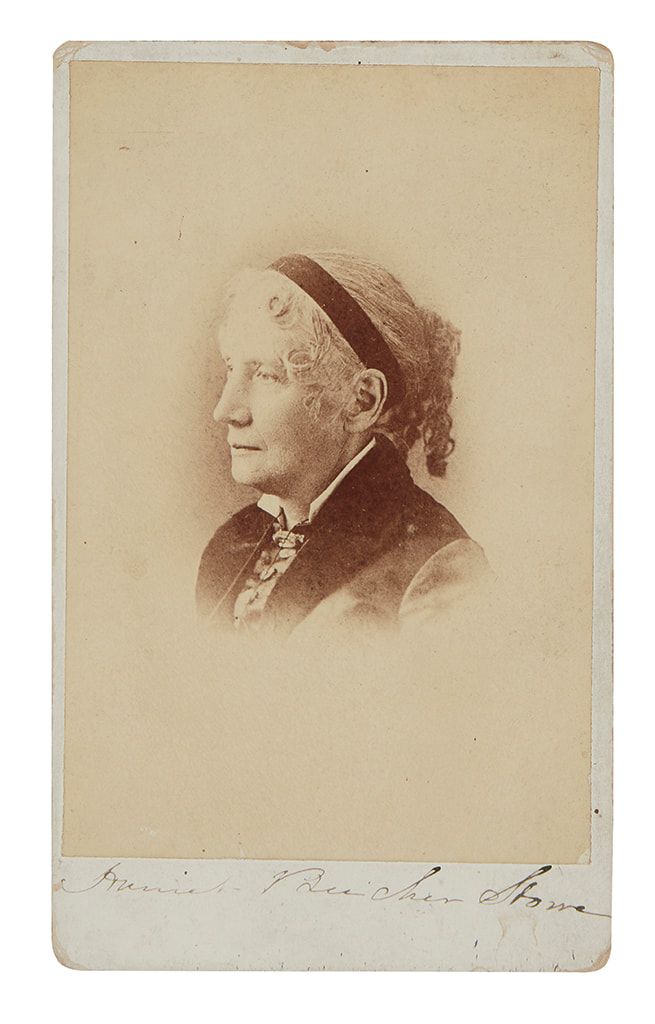 When Harriet Beecher Stowe lived on campus from 1852 to 1864, she and her husband, Calvin, "shocked the townspeople with the amusements which they provided for their guests: tableaux, charades, and even, on one memorable occasion, a Christmas tree." (Fuess, An Old New England School, p. 318).  Hiking in Australia's Blue Mountains, I remained convinced that I am right to have a new focus for my writing: my own little corner of the world. That's Andover, Massachusetts. Plenty here to contemplate, try to understand, put into words, stories. Phillips Academy headmaster Claude M. Fuess (1885-1963) liked to think and write about how closely the life of the school was bound up with that of our country. I would like to think and write about how closely it was bound up with that of our town. P.A. strove to "eradicate provincialism," Fuess wrote in An Old New England School (1917). A rare-book and print dealer who used to have a shop in Andover once complained to me that P.A., if searching for rare materials, never thought to consult with him. His interpretation: he was too local. Too provincial. In writing local, I am hoping not to make the same mistake: missing what's right under my nose. William Blake's "To see a World in a Grain of Sand" line comes to mind.
P.A. was concerned about provinciality from its start on April 30, 1778, the first day of class for its student body of thirteen boys, whose age range was six to nearly thirty. (Founder Samuel Phillips and the school's first principal, Eliphalet Pearson, were each age twenty-six.) "In order to guard against any tendency to allow it to degenerate into a local or provincial academy," Fuess wrote, "they ... provided that a major part of the Trustees should not be inhabitants of the town in which the institution was located..." That was easier said than done, however. Of the first board of trustees, six of the twelve were Andover residents. What is more, the boys lived in a system of boarding houses kept by private families in town. There would be no dorms for P.A.'s first fifty years. To be continued.  On November 10, 1906, at Cheever House, 157 Main Street, Andover, Massachusetts -- a boarding house for P.A. students -- C. Edmond Riggs ('10) of Emporia, Kansas, shot J. Creighton Tracy ('09) of Mount Vernon, New York, with what was ruled to have been a "purely" accidental discharge of his revolver. The night before, Riggs had lent the revolver to a day student. Named only Hilton in The Phillips Bulletin, he reportedly told Riggs he dreaded the dark walk home through the woods to Canobie, New Hampshire, a distance of nearly 13 miles. The following morning, the Bulletin states, when Riggs and Tracy entered Riggs's room, the revolver was lying on a table, where Hilton apparently left it. The tragedy occurred when Riggs reached for it with one hand while with the other hand he began to retrieve from his pocket the key he needed to unlock the drawer of the desk in which he kept the weapon. "In some unaccountable way," the Bulletin states, "the revolver was discharged." A quick internet search reveals that Tracy, age sixteen, was buried close to his family home, in New Rochelle, New York, while Riggs, who died six years later at age twenty-three, was buried in Emporia. There's no way for me to learn the cause of Riggs's death, but he and Tracy were described in the Bulletin as "warm friends and constant companions." 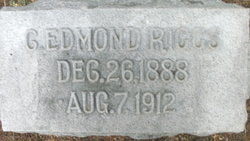 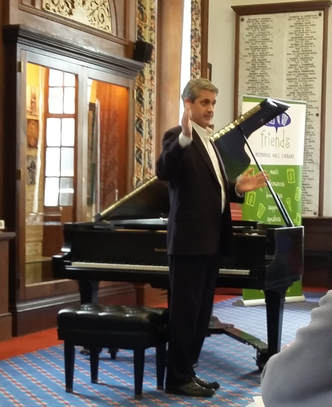 Stephen Porter (www.stephenporterpiano.com) played Chopin and Liszt at Andover's Memorial Hall Library yesterday. Polonaise Fantasie was my favorite piece, perhaps because it is most familiar to me, from years of hearing similar Chopin works played by our reproducing Ampico piano. Now, thanks to Andover-based artist and friend Pat Keck (www.patkeck.com), we have a Steinway grand for husband Bob to play. No one played it at Pat's house anymore and she wanted more room for her sculptures. Our Ampico is now at the Morris Museum (morrismuseum.org) in Morristown, New Jersey.
In past posts, I have talked about Memorial Hall's first librarian, Ballard Holt, who doubled as its janitor. His Civil War photo is behind a glass-fronted case in this room, along with other 19th-century "Andover Faces." On the walls are plaques (one shown) listing the names of the town's war dead. When, years ago, I walked in with writer Andre Dubus (1936-1999) -- we were doing a program together -- he noticed the plaques immediately, as a former Marine -- or, probably, any veteran -- would. Having seen Frederick Wiseman speak about his film Ex Libris on Saturday, I found myself on Sunday even more grateful for this library than I might otherwise have been, even though, judging from the excerpts he showed, the Wiseman film is as much about New York City as it is about its library or libraries in general. Each library in the country or the world reflects its community, and mine reflects mine. I can't change that, nor would I want to. In these politically difficult times -- Wiseman could not help but make derogatory comments about Trump and I can't blame him -- I have found it best to dive deeply local. Eat locally? I am writing locally, and it has made all the difference in achieving peace of mind. |
AuthorThe "Commentaries" portion of this website is a record of some of Ms. Schinto's cultural experiences, e.g., books read, TV series watched, movies seen, exhibits visited, plays and musical events attended, etc. She also from time to time will post short essays on various topics. 
|
 RSS Feed